
Most home cooks throw vegetables straight onto the grill and wonder why they turn to mush or char to ash. You need three things: the right produce, proper prep, and heat control.
Zucchini, bell peppers, and broccoli each demand different handling. Salt draws moisture from zucchini. Peppers blister best over open flame. Broccoli needs a quick parboil before hitting the grates.
Get these steps wrong, and you waste good food. Get them right, and you’ll stop treating vegetables as an afterthought. Here’s how to do it.
Pick Seasonal Vegetables to Grill: Summer, Winter, and Year-Round
For grilling prep, coat with oil and salt. Use a grill basket for small pieces. Resting after grilling lets juices reabsorb.
Recommended Products

NATURALLY SEASONS FOOD WHILE COOKING: Crafted from 100% food-grade Pink Himalayan salt, this cooking block lightly seasons food as it cooks. The heated surface enhances the flavor of steak, burgers, seafood, chicken, vegetables, and more without overpowering their natural taste.

COOK, SERVE & ENTERTAIN IN ONE: Turn everyday meals into memorable experiences with the UMAID Sizzle Block. Heat and use for burgers, steak, vegetables, seafood, appetizers, and more-or bring the experience directly to the table for serving

Versatile Seasoning Blend: This Sal de Parrilla Blend is a versatile seasoning mix perfect for grilling, roasting, or seasoning meats, vegetables, and more.
Prep Vegetables for the Grill: Salt, Slice, and Parboil by Type
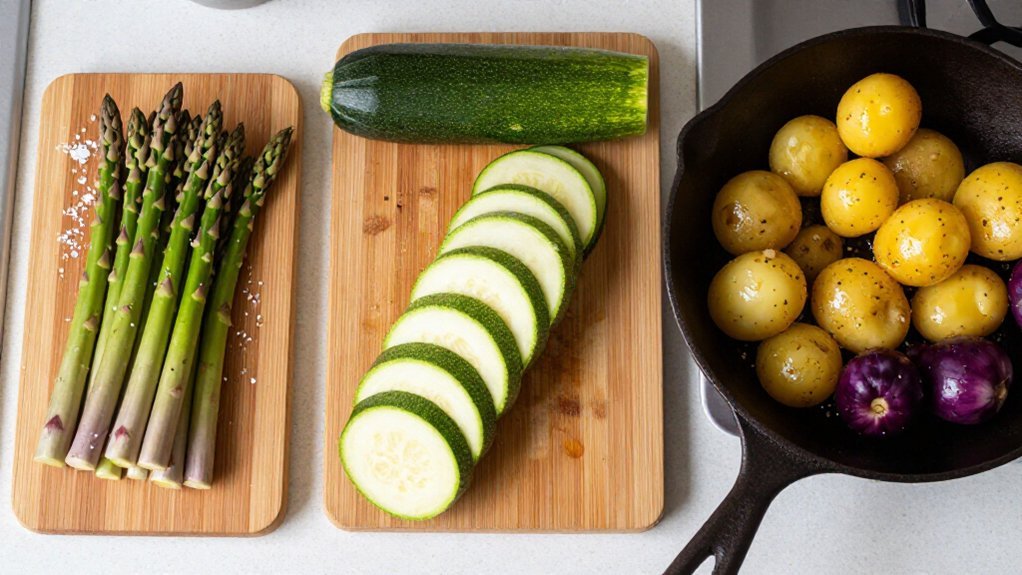
How do you stop zucchini from turning mushy on the grill? You’re salting ahead. Slice zucchini, sprinkle with salt, and let it drain for 30 minutes. This pulls out excess water and prevents sogginess.
Salt zucchini slices for 30 minutes before grilling to draw out excess water and prevent mushiness.
Now you’re ready to prep all vegetables properly. Follow these steps:
- Cut to uniform thickness, 1/3 to 1/2 inch, for even grill time
- Use parboiling or pre-cooking for dense vegetables like cauliflower and carrots
- Steam or blanch delicate pieces, then plunge into a cooling ice bath to stop cooking
- Oil before grilling for moisture retention, then use direct heat for quick char
This gives you tender interiors without mushiness. You’re controlling moisture and timing so vegetables cook perfectly. Dense vegetables need that head start, thin ones don’t. You’re adjusting technique by type every time you grill vegetables.
Recommended Products

Stainless Steel build
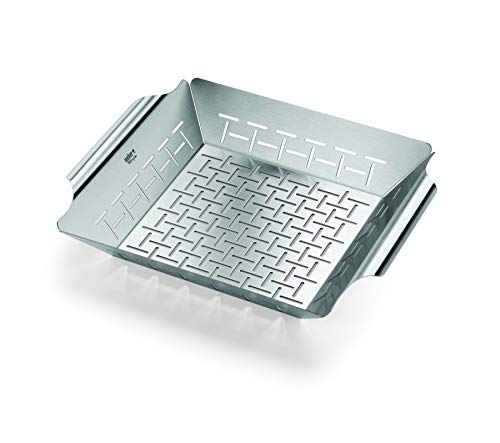
Ideal for vegetables and smaller pieces of meat
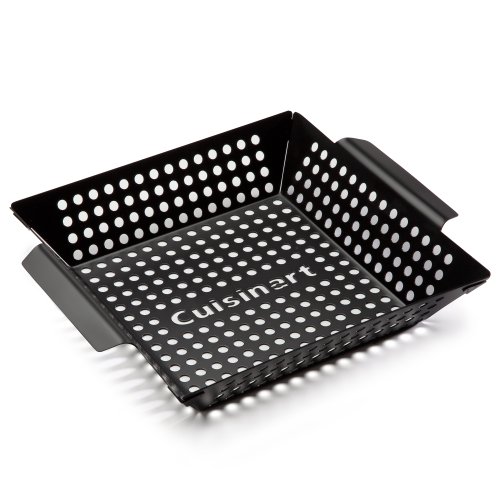
AVOID THE GRATE ESCAPE: Perforated design keeps the open-flame flavors while preventing small ingredients from falling through grill grates.
Grill Vegetables Hot and Finish With Sauce While They Sizzle
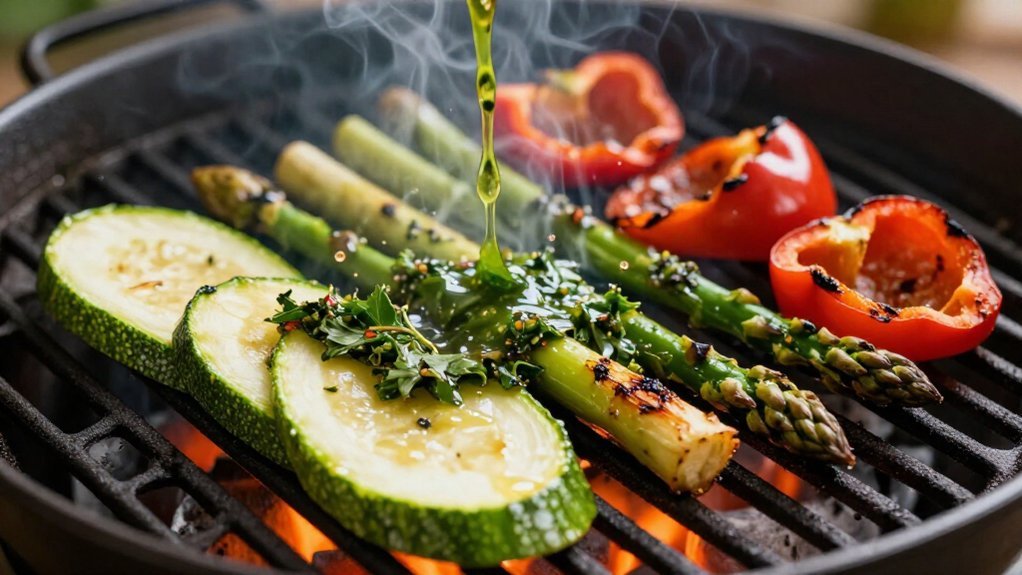
With your vegetables prepped and ready, you’re set to handle the heat. Fire your grill to medium, holding steady at 350–450°F for best char and moisture retention. You’ll flip your grilled vegetables after 3–5 minutes, then let them rest so juices reabsorb.
Best For: Small or Delicate Vegetables
Grab skewers or grill baskets for cherry tomatoes, asparagus tips, or zucchini rounds. These tools prevent losses through grates and promote even browning.
Oil Brushing and Saucing
Brush vegetables with oil before they hit the flames. You’ll finish with sauce or finishing fats immediately off the grill while they sizzle, hot surfaces absorbing flavor fast. Apply herb finishing and delicate sauces at this stage, burning risks eliminated.
Top with toasted nuts or finishing salts. Serve now.
Recommended Products

Del Sol - Sliced Cherry Peppers 1 Gallon - Sliced Cherry Peppers

COOK LIKE A PRO: Get that perfect sear for your steak quick and easy! Create amazing dishes at home with our PRO Searer Torch; perfect for searing meat and fish, caramelizing sugar atop creme brulees, melting cheese, roasting bell peppers and tomatoes, and much more