
365 Low-Fat Main Dishes — One Recipe for Every Day!
Easy, beginner-friendly, with full nutrition info.
👉 Download Now – Just $2.90!I first encountered the magic of Pad Thai at a bustling street market in Bangkok, where the aroma of sizzling noodles filled the air.
The harmonious balance of tangy, sweet, and savory flavors creates a memorable dining experience that will have everyone asking for your secret.
This vegetarian version captures all the essence of the original, while being accessible for those who prefer a plant-based meal.
Perfect for a weeknight dinner, it delivers impressive results with straightforward preparation.
Whether you’re a seasoned cook or a beginner, this dish offers a delightful culinary adventure.
The History and Cultural Significance
• Pad Thai Recipe traces its origins to Thailand in the 1930s, where it was originally created by Prime Minister Plaek Phibunsongkhram as a nationalistic culinary effort.
• The dish evolved over decades as it incorporated more regional ingredients and techniques, eventually becoming the beloved version we know today.
• In Thai culture, this dish traditionally appears at casual gatherings and street food stalls, symbolizing the unification of flavors and community.
• While many variations exist across different regions, the authentic version maintains a balance of sweet, sour, and salty flavors that sets it apart from imitations.



Recipe Overview
Nutritional Information (per serving)



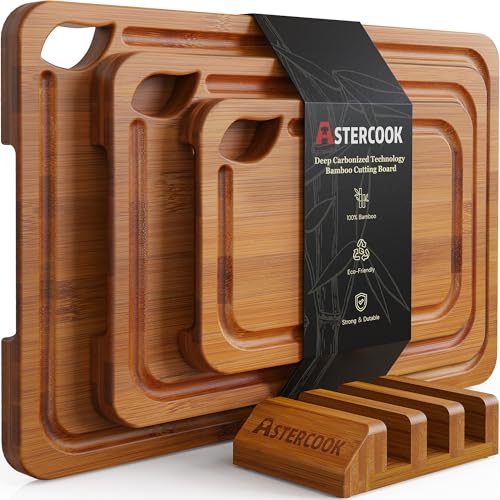

Essential Equipment Guide
Wok: A wok is essential for achieving the high-heat stir-fry that gives Pad Thai its characteristic texture and flavor.
Alternatives like a large non-stick skillet can work, but look for a heavy bottom to distribute heat evenly.
Tongs: Tongs allow for precise handling of noodles and ingredients, ensuring even cooking and mixing.
If tongs are unavailable, a spatula can be used, but make sure it’s heat-resistant.
Microplane Grater: This tool is perfect for grating fresh lime zest and garlic, which enhances the freshness of the dish.
If unavailable, a fine grater or zester can be used.



Ingredients
For the Noodles
|
| Amount | Ingredient | Notes |
|---|---|---|
| 8 ounces | rice noodles | soaked in warm water for 10 minutes |
For the Sauce
| Amount | Ingredient | Notes |
|---|---|---|
| 3 tablespoons | tamarind paste | provides tangy depth |
| 2 tablespoons | soy sauce | adds umami flavor |
| 1 tablespoon | brown sugar | balances the tanginess |
Vegetables
| Amount | Ingredient | Notes |
|---|---|---|
| 1 cup | bean sprouts | adds crunch |
| 1 cup | carrots | julienned for texture |
Seasonings
| Amount | Ingredient | Notes |
|---|---|---|
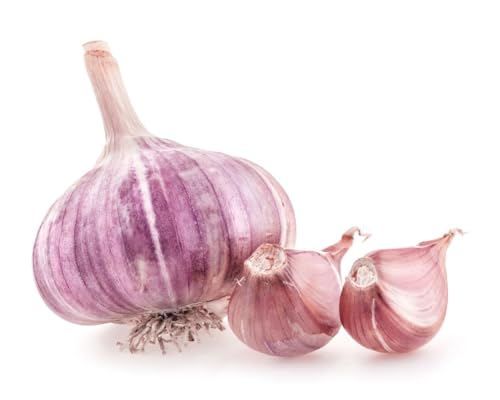
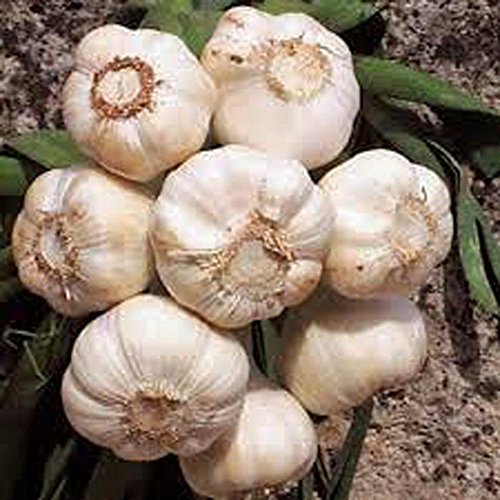
| 3 cloves | garlic | minced, enhances flavor |
| 1 tablespoon | vegetable oil | for frying |
Garnishes
| Amount | Ingredient | Notes |
|---|---|---|
| 1 bunch | cilantro | chopped, for freshness |
| 1 whole | lime | cut into wedges for serving |


Preparation Methods
Soaking Noodles: Soaking rice noodles in warm water until pliable is crucial for achieving the right texture.
This step prevents the noodles from becoming mushy during cooking.
Aim for a firm but flexible noodle.
High-Heat Stir-Fry: Cooking over high heat is essential to develop the smoky flavor characteristic of Pad Thai.
Keep all ingredients ready and work quickly to avoid burning.
Sauce Reduction: Reducing the sauce slightly before adding noodles helps it adhere better.
This enhances the flavor absorption and prevents the dish from becoming watery.


Step 1: Prepare Ingredients

Gather all ingredients and equipment before starting.
Soak the rice noodles in warm water for about 10 minutes until pliable.
Julienne the carrots and chop the cilantro.
Cut the lime into wedges for serving.




Step 2: Make the Sauce
In a small bowl, mix tamarind paste, soy sauce, and brown sugar.
Stir until the sugar is fully dissolved.
Taste and adjust sweetness if necessary.
Set aside for later use.


Step 3: Heat the Wok
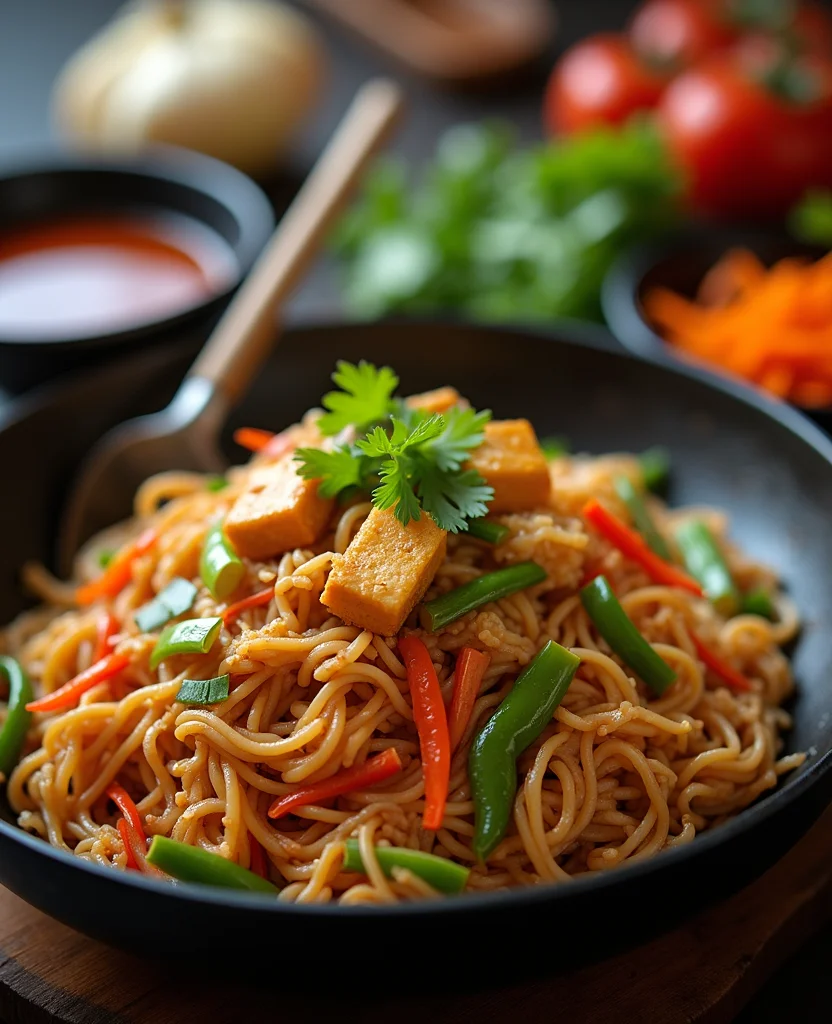
Place the wok over high heat and let it heat up for about 1 minute.
Add the vegetable oil and swirl to coat the bottom of the wok.
Look for the oil to shimmer slightly, indicating it's hot enough.
Avoid overheating to prevent burning.
Step 4: Stir-Fry Garlic
Add the minced garlic to the hot wok.
Stir-fry quickly for about 30 seconds until fragrant.
Be cautious not to let the garlic burn.
Remove from heat if it starts to brown too fast.
Step 5: Cook the Noodles
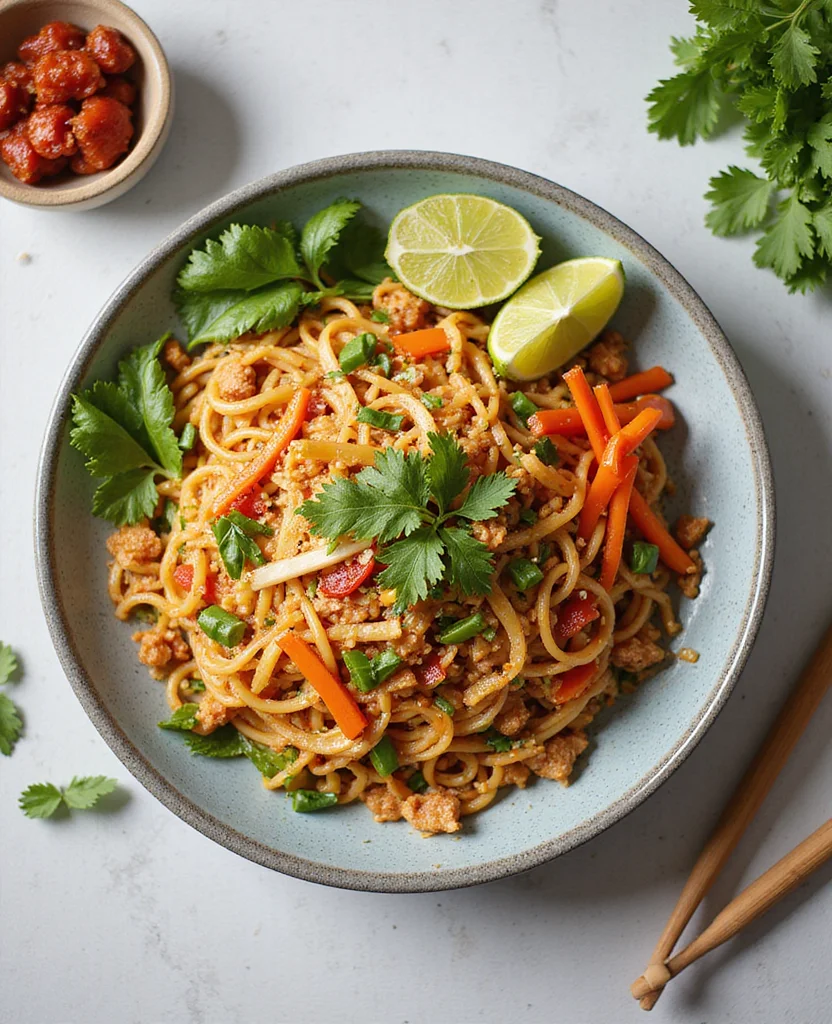
Add the soaked noodles to the wok.
Stir-fry for about 2 minutes until they start to soften.
Ensure the noodles are well-coated with oil and garlic.
Keep them moving to prevent sticking.
Step 6: Add Vegetables

Toss in the julienned carrots and bean sprouts.
Stir-fry for another 2 minutes.
Ensure even mixing for consistent cooking.
The vegetables should be crisp-tender.
Step 7: Pour in the Sauce
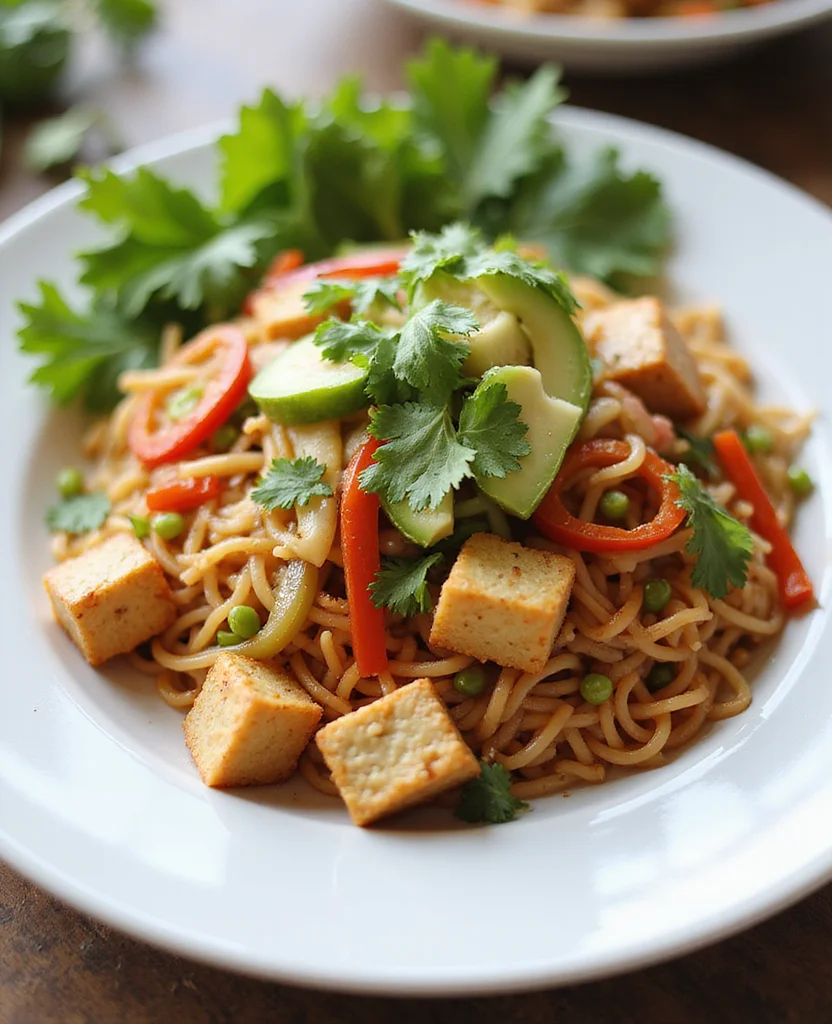
Pour the prepared sauce over the noodles and vegetables.
Toss to combine everything thoroughly.
Cook for another 2-3 minutes, allowing the sauce to thicken slightly.
Ensure the sauce coats all ingredients evenly.

Step 8: Serve and Garnish
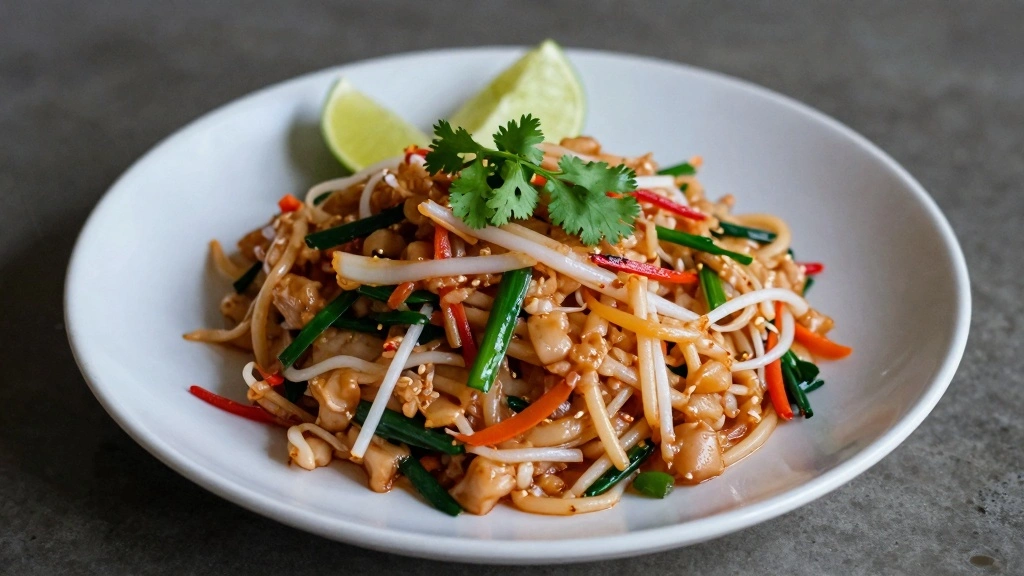
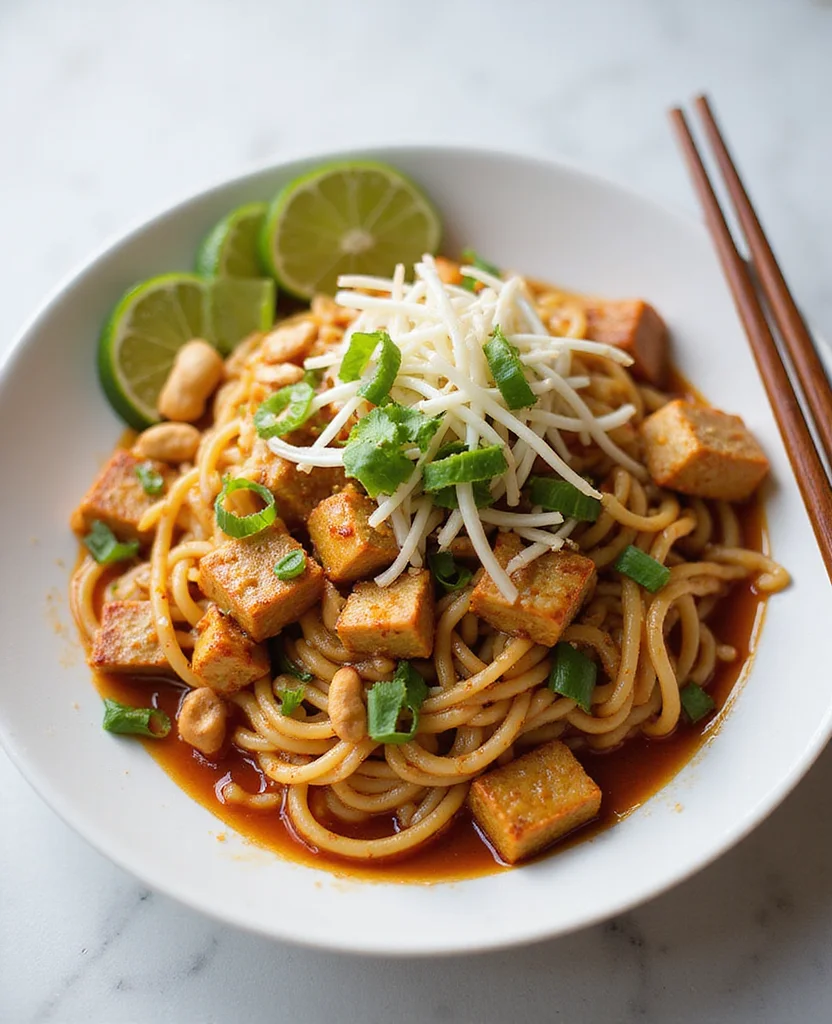
Transfer the cooked Pad Thai to serving plates.
Sprinkle with chopped cilantro for freshness.
Serve with lime wedges on the side for squeezing over.
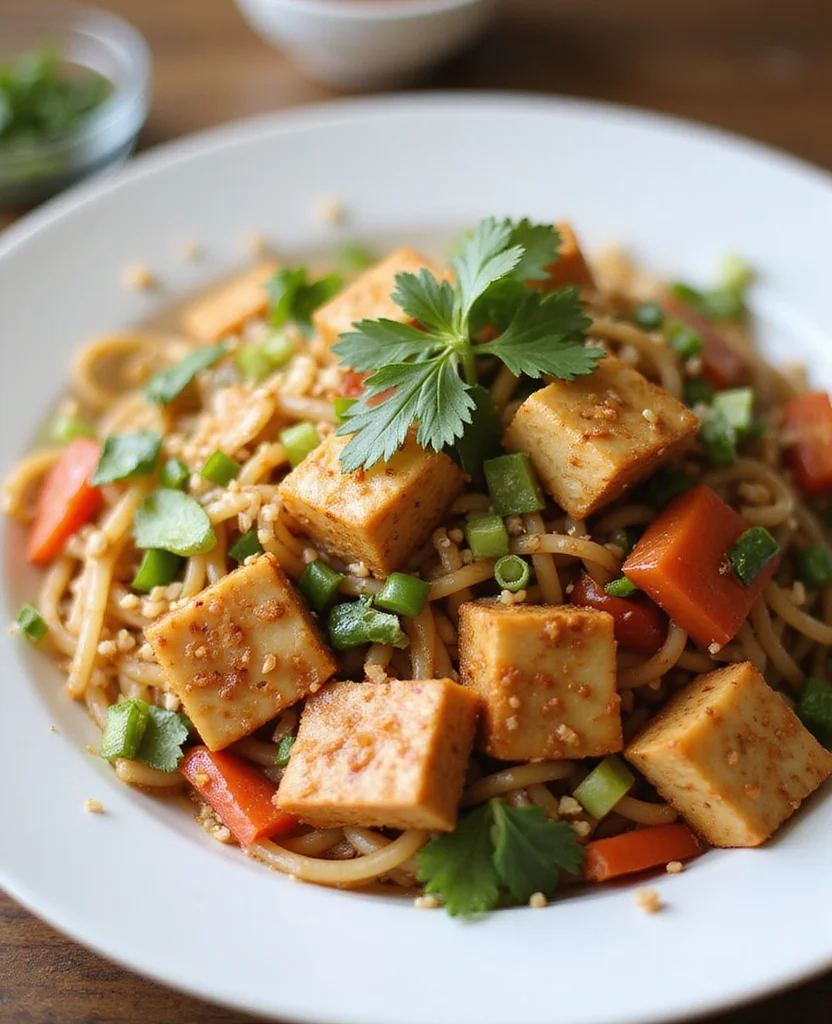
Enjoy your homemade vegetarian Pad Thai.
Critical Timing and Temperature Guide
Soaking Noodles: Soak in warm water for 10 minutes until pliable; avoid longer soaking to prevent mushy texture.
Stir-Frying: Maintain high heat to achieve the smoky flavor; stir continuously to avoid burning.
Sauce Reduction: Allow sauce to thicken slightly in the wok; look for bubbles and slight thickening as an indicator.
Pro Tips for Pad Thai Recipe
• Ingredient Selection: Choose fresh bean sprouts and limes; they make the biggest difference in flavor and freshness.
• Preparation Secret: Briefly soaking noodles in warm, not hot, water prevents over-softening.
• Temperature Management: Ensure wok and oil are hot before starting to get the best stir-fry results.
• Texture Enhancement: Use tongs to toss ingredients gently, preserving the texture of noodles and vegetables.
• Flavor Layering: Balance the sauce components by tasting and adjusting sweetness or tanginess as needed.
• Make-Ahead Strategies: Prepare the sauce and chop vegetables in advance; store separately in airtight containers in the fridge.
• Restaurant-Quality Finishing Touches: Garnish with fresh cilantro and a squeeze of lime just before serving to brighten the flavors.
• Equipment Optimization: Use a heavy-bottomed wok if possible, as it retains heat better for even cooking.
Troubleshooting Common Issues
• Noodles Too Sticky: This occurs when noodles are over-soaked or cooked too long; rinse briefly under cold water to prevent sticking.
• Flavors Unbalanced: Adjust sweetness or tang by adding more sugar or lime juice to taste; always taste before serving.
• Soggy Vegetables: Ensure vegetables are added at high heat and cooked quickly to retain their crunch.
• Sauce Too Thin: Cook longer after adding sauce to thicken; consider adding a bit more tamarind paste for body.
• Not Enough Flavor Depth: Ensure garlic is not burnt but cooked until just fragrant; this adds depth to the dish.
Variations and Regional Differences
• Northern Thai Variation: Features more herbs and spices, often incorporating Thai basil and lemongrass for a fragrant twist.
• Southern Thai Variation: Known for its spicier profile, with added chili paste and sometimes coconut milk for richness.
• Westernized Version: Often includes additional vegetables like bell peppers, and sometimes uses peanut butter in the sauce for creaminess.
• Traditional Thai Street Style: Focuses on minimal ingredients, with emphasis on traditional fish sauce and dried shrimp for umami.


Food Science Behind the Recipe
• Maillard Reaction: The browning of garlic and noodles in high heat develops complex flavors, enhancing the dish's overall taste.
• Emulsification: The combination of tamarind paste and soy sauce creates a balanced emulsion that clings to the noodles.
• Acid-Base Balance: The tamarind and lime juice provide acidity, which balances the sweetness and saltiness, creating a harmonious flavor profile.
Frequently Asked Questions
What's the most common mistake people make when preparing Pad Thai? Over-soaking the noodles, leading to a mushy dish. Always soak until just pliable.
Can I use other types of noodles? While rice noodles are traditional, you can experiment with soba or zucchini noodles for a different texture.
How can I make this dish spicier? Add crushed red pepper flakes or a dash of Sriracha to the sauce for extra heat.
Is there a gluten-free version? Ensure soy sauce is gluten-free or substitute with tamari.
What protein options can I add? Consider tofu or tempeh for a vegetarian protein boost.
Why is my Pad Thai oily? Use the recommended amount of oil and ensure high heat to prevent oiliness.
Can I prepare Pad Thai ahead of time? It's best enjoyed fresh, but you can prepare components in advance and combine just before serving.
Serving and Presentation Guide
• Traditional Presentation: Serve on a large platter, garnished with cilantro and lime wedges, with additional sauce on the side.
• Modern Plating: Serve in individual bowls, artistically arranged with colorful vegetables and garnishes for a contemporary look.
• Family Style: Present on a communal plate, allowing guests to serve themselves, encouraging a shared dining experience.
• Elegant Presentation: Use large white plates and place a lime wedge on the side, with a sprinkle of peanuts for added texture.


Conclusion
Embark on a flavorful journey with this easy-to-make vegetarian Pad Thai recipe.
Its balance of vibrant flavors and textures will make it a staple in your meal rotation.
Invite friends and family to share in this culinary delight.
Happy cooking and enjoy the taste of Thailand!