
You grab a can of Progresso Lentil Soup for lunch, and you notice the label says 160 calories per cup. You think that’s the whole story. It isn’t.
The oil you drizzle on top, the hunk of crusty bread you dunk in, the second “cup” you pour without measuring; these pile on fast. You need to know what actually counts before you track your next bowl.
What’s the Calorie Count in a Cup of Lentil Soup?
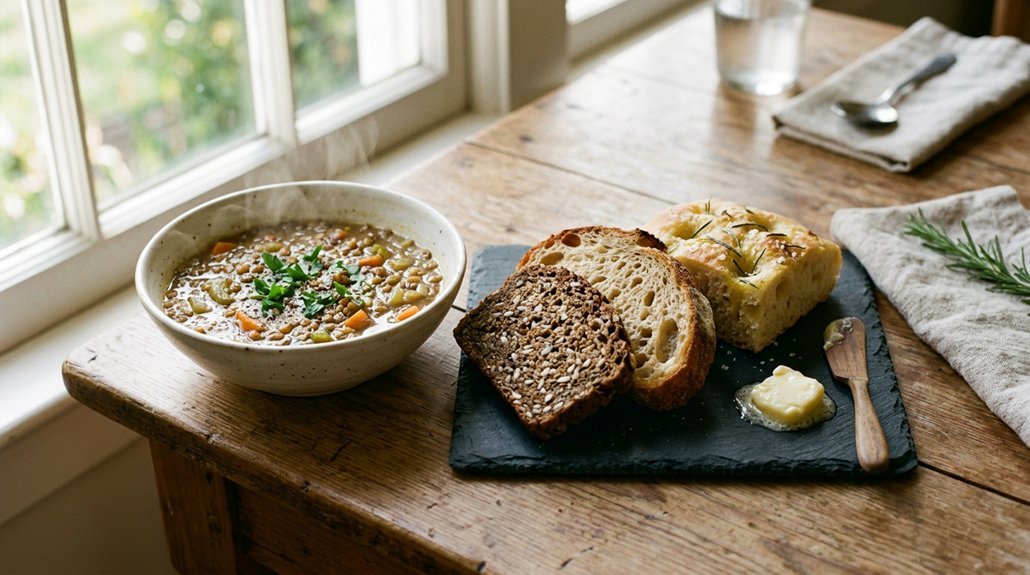
How much are you actually eating when you ladle up a bowl? You’re probably scooping more than you think. A standard serving size of lentil soup is 1 cup, about 248 grams. That cup holds roughly 180 calories. Some variations hit 186 or 194 calories depending on your recipe.
What Changes the Count
- Broth choices: vegetable, chicken, or beef broth shift calories
- Added oil: even a tablespoon changes your total
- Toppings: cheese, croutons, or cream add up fast
Best For
- Meal planning: Track 180 calories per cup in your log
- Portion control: Measure; don’t guess your serving size
You’re working with estimates. Home-cooked lentil soup varies. Restaurant versions often pack more.
Check your specific recipe. Count your calories accurately. You’ll manage your intake better when you know exactly what’s in your bowl.
Recommended Products

4 LOW SODIUM FLAVORS, 8 CUPS: Two each of Cilantro Lime Chile, Three-Bean Chili, Tomato Bolognese, and Vegetable Harvest. Ranging between 15mg – 140mg sodium per cup, much lower than typical instant meals - full flavor, no compromise


Dr. McDougall's Right Foods Vegan Split Pea Soup, Lower Sodium, 1.9-Ounce Cups (Pack of 6) ( Value Bulk Multi-pack)
Where Lentil Soup Calories Come From: Fat, Carbs, and Protein
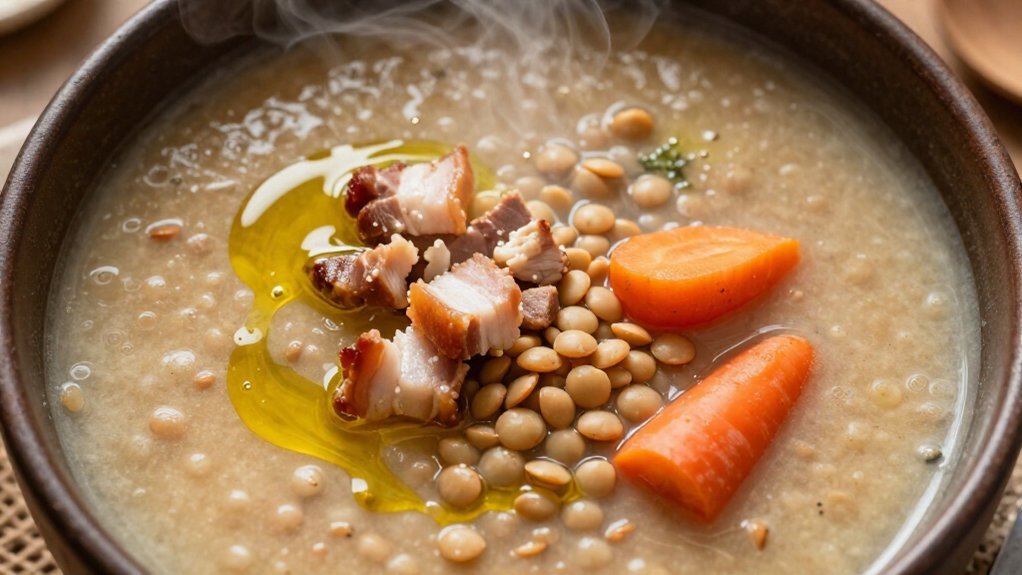
You get nearly all your calories from carbs and protein when you eat lentil soup, since a cup holds about 25 g of carbohydrates and 12 g of protein but only 1 g of fat. That carb load includes 8 g of fiber, which keeps you full longer and steadies your energy.
If you’re tracking macros, you’ll notice this split makes lentil soup a reliable plant protein source without the cholesterol you’d find in meat-based options.
Recommended Products

Clear plastic for durability and ease of measuring

Strong, durable stainless steel design

Patented angled surface lets you read measurements from above
Macronutrient Calorie Sources
Most of the calories in a cup of lentil soup come from carbohydrates, with protein and fat playing smaller but important roles. You’re getting about 25–26 grams of carbohydrates per cup from the lentils, which drives the bulk of that 180–193 calorie count. Lentils pack roughly 10–12 grams of protein per cup too, so you’re not just loading up on carbs.
Where Your Calories Actually Come From
- Carbohydrates: 25–26 g per cup, the biggest calorie source
- Protein: ~12 g per cup from lentils, keeping you full
- Fat: 4–5 g per cup, usually from olive oil in your pot
Best For: Managing weight with plant-based nutrition.
That protein supports your muscles. The moderate fat adds flavor without excess. You’ve got a balanced bowl that delivers sustained energy without heavy calorie density.
Fiber-Rich Carbohydrates
Looking closer at those carbohydrates reveals why lentil soup keeps you full for hours.
Understanding the Carb Breakdown
Each cup of lentil soup delivers 25 g of total carbohydrates. You’re getting 8 g of fiber in that serving, which leaves roughly 17 g as net carbs. That fiber content changes how your body processes these lentil soup calories.
Why Fiber Changes Everything
The fiber slows digestion. You feel satisfied longer. Your blood sugar stays steadier. You’re not crashing an hour after eating.
Best For: Anyone tracking macros, managing hunger, or balancing energy throughout the day.
The minimal fat content means nearly all your lentil soup calories come from carbs and protein. You’re fueling with complex, slow-burning energy rather than quick sugar spikes. That fiber difference makes lentil soup a practical choice when you need staying power.
Plant Protein Content
Where do those 180 to 193 calories actually come from? You’ll find a solid chunk coming from lentil protein. A typical cup delivers about 12 grams of protein, making lentils a reliable plant-based protein source.
Why Lentil Protein Matters
You get substantial protein without meat. This plant-based protein supports muscle maintenance and keeps you full longer. Unlike many soup options, lentil soup calories work harder for you: protein and carbs dominate, while fat stays low at 1 to 5 grams per cup.
Best For:
- Vegetarians seeking complete amino acid profiles
- Meal preppers wanting sustained energy
- Budget-conscious eaters prioritizing nutrition
The macronutrient balance, approximately 12g protein, 25g carbs, and 8g fiber per cup, positions lentil soup as a nutrient-dense choice. You’re not just counting lentil soup calories; you’re investing in functional nutrition that satisfies.
How Broth, Oil, and Toppings Change the Count
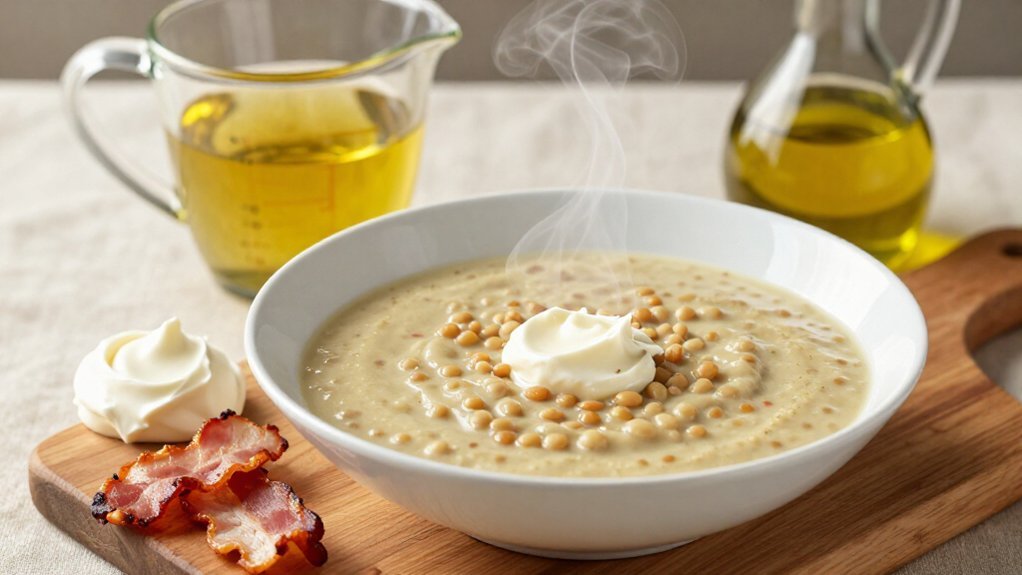
Why does your lentil soup land at 180 calories one day and push past 250 the next? You control the answer through three choices: broth, oil, and toppings.
Broth: Your Foundation
You cut calories when you pick vegetable broth over meat-based options. Your lentils simmer in a lighter base, and you keep each cup near that 180-calorie mark. Oil-based starts or rich stocks push you higher before you add anything else.
Oil: The Hidden Boost
You add two tablespoons of olive oil, and you’ve poured in roughly 240 calories to the whole pot. That extra drizzle costs you.
Toppings: Your Final Lever
You sprinkle spinach, and you add almost nothing. You toss in diced tomatoes, and you add 30–40 calories per cup. You finish with cheese or sour cream, and you blow past 250. You choose lighter toppings, and you stay in range.
Recommended Products

MEDITERRANEAN-STYLE LENTIL SOUP: Savor the flavor of lentils, chickpeas, and roasted red bell pepper in a tomato based broth

SICILIAN RECIPE- Alessi lentil soup mix is full of lentils, vegetables, pasta, and select spices blended together based off an old world recipe. Soups are eaten in almost every corner of the world, and over the years, certain soups have become associated with countries- Italy is no exception! Do yourself a favor and grab a couple of Alessi’s Sicilian lentil soup mixes and enjoy the taste of Italy

Twelve 14.5-oz cans of Amy’s Organic Light in Sodium Lentil Vegetable Soup, Light in Sodium with 50% less sodium than Amy's soup
Homemade vs. Canned: Where Hidden Calories Hide
How do you know what you’re actually eating when you crack open a can versus stirring a pot on your stove? You control every ingredient when you make lentil soup at home. Your typical homemade bowl runs 180–193 calories per cup. You pick your oil, your broth, your salt.
Canned versions hide surprises. You’ll find sodium levels hitting 800–1200 mg per can. That salt doesn’t add calories directly, but it bloats your portion and skews your perception of fullness.
Watch where calorie density shifts:
- Red lentils blend creamier without extra fat, keeping your cup lighter
- Canned soups often use thickeners and oils you didn’t choose
- Your add-ins like bread or croutons stack calories fast
You decide what goes in your bowl. That’s where real control lives.
Recommended Products

HEARTY SOUP: Savor this wholesome recipe of Andouille sausage, lentils, red bell peppers, and other delicious ingredients in a savory chicken broth
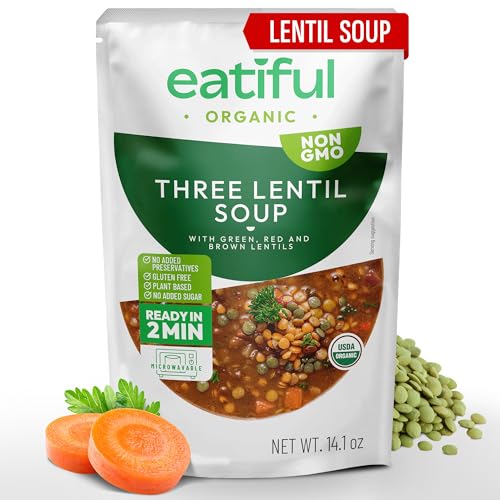
100% ORGANIC INGREDIENTS. EATIFUL’s lentil soup is crafted with care using high-quality, natural ingredients. It features a nourishing mix of organic green, red, and brown lentils, carrots, potatoes, roasted onions, and leeks, all seasoned with sea salt, garlic powder, onion powder, paprika, and smoked paprika. Every spoonful is brimming with plant-based goodness and deep, savory flavors—delivering a wholesome and satisfying meal any time of day.

What “One Cup” Actually Means for Tracking
When you grab a measuring cup for lentil soup, you’re actually dealing with more complexity than it seems. A cup of water weighs 8 ounces, but your thick, chunky lentil soup might hit 10–12 ounces for that same volume, throwing off calorie counts fast. You’ll need to know whether you’re tracking by weight (grams on a scale) or volume (fluid ounces), and whether you’re eating homemade with extra vegetables or a thinner canned version.
Weight vs Volume
- Best for accuracy: Weigh your soup in grams. A kitchen scale removes guesswork.
- Best for speed: Use a 1-cup measuring cup, but know you’ll estimate 180–200 calories at best.
Homemade vs Canned
- Homemade lentil soup varies wildly; your aunt’s recipe with olive oil and potatoes packs more calories than a basic water-based version.
- Canned soups like Progresso or Amy’s list precise nutrition facts per cup, but check if their “cup” means 240 mL or 8 fluid ounces; some brands differ.
Measuring Techniques Matter
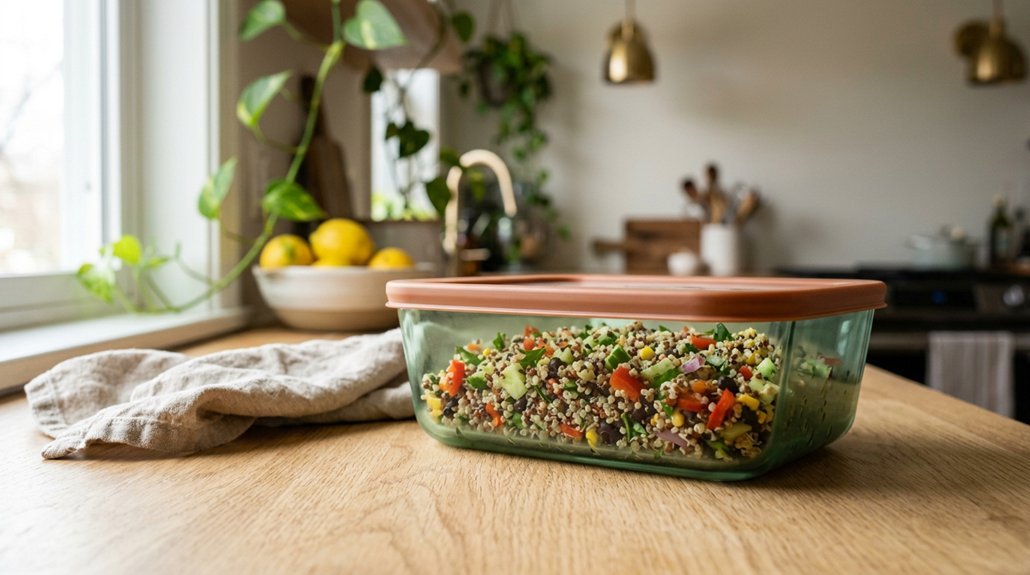
- Best for meal prep: Portion soup into 1-cup containers immediately after cooking.
- Best for dining out: Ask staff; most restaurants serve 1.5–2 cups per bowl, not 1 cup.
Your tracking app assumes standard serving sizes, but you’re the one holding the spoon. Pick one method and stick with it, or your weekly calorie totals won’t mean much.
Recommended Products

One (1) can of Campbell's Protein Mediterranean Lentil Soup has 20 grams of protein and 9 grams of fiber


No hydrogenated fats or high fructose corn syrup allowed in any food
Weight vs Volume
For precise lentil soup calories, use this approach:
- Volume tracking: Measure with a liquid cup; assumes 240–248 g consistency
- Weight tracking: Use 248 g per cup for greatest precision
- Adjust for thickness: Red lentils create denser textures than brown or green, affecting actual calories slightly
Most databases list approximately 180–186 calories per cup with 12 g protein, 25 g carbohydrate, and 8 g fiber. When meal planning, apply these per-cup values and adjust for any bread or garnishes you add.
Homemade vs Canned
Why does “one cup” hit different depending on where your lentil soup comes from? The nutrition facts tell only part of the story. When you track lentil soup calories, you need to know what’s actually in that cup.
Homemade vs Canned: What Changes
- Homemade: You control the ingredients. One cup delivers about 180 calories, 12 g protein, and 8 g fiber. You skip the excess sodium.
- Canned: It’s convenient, but sodium spikes and nutrient loss often hide in that same 1-cup serving. The label says 180 calories, yet your body processes it differently.
Best For
- Homemade: Precision tracking, higher protein, lower sodium
- Canned: Speed, but check labels carefully
Your tracking app assumes standard nutrition facts. Make sure your bowl matches what you log.
Measuring Techniques Matter
You already know homemade and canned soups carry different numbers. What you might not realize is how much measurement accuracy affects your actual lentil soup calories.
Why Your Cup Might Lie
A “serving size” on labels means 1 cup (248 g). But you probably eyeball it. That loose scoop can easily become 1.5 cups. You’re tracking 180 calories when you’re really eating 270.
Check Your Technique
Use a liquid measuring cup, not a coffee mug; weigh your portion on a scale for true gram accuracy; level off solids, don’t heap.
I’ve seen folks wonder why their counts never match. They measure lentil soup calories wrong. Precision matters when you’re building habits.
Which Lentil Soup Ingredients Add the Most Calories
How exactly do the calories pile up in your lentil soup? Lentils themselves contribute most of the calories, with one cup delivering roughly 180-200 kcal before cooking. Olive oil follows closely behind; each tablespoon adds 120 calories, and most recipes use two tablespoons for sautéing, pushing 240 kcal into your pot.
Tomatoes, broth, and onions add minimal impact, combining for just 20-60 kcal total. Your lentil variety matters too. Red lentils absorb more liquid, creating thicker, more calorie-dense cups than green or brown types.
Watch your optional add-ins. Chicken or sausage dramatically spike calories per serving, while keeping your base soup near 180-200 kcal per cup. Track your oil and protein choices, and you’ll control exactly where your lentil soup lands.
Recommended Products
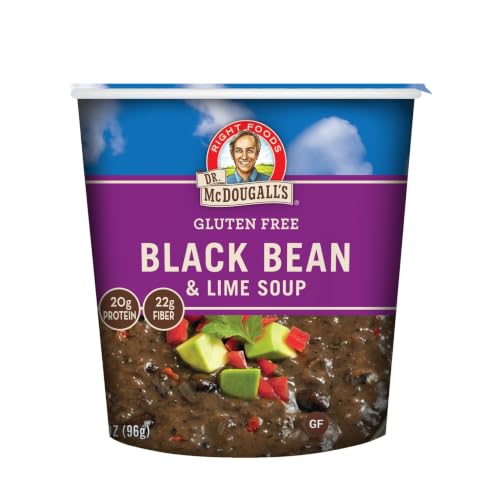
POWERHOUSE NUTRITION IN EVERY CUP — 20g of plant-based protein and 22g of fiber per serving. This isn't a light snack — it's a thick, hearty, genuinely filling meal that keeps you going.

ZESTY GREEN CHILE LENTILS: Lentils, green bell peppers, and jalapeños with cumin, garlic, lime, and Southwestern spices. Medium heat (6/10). Bold, tangy flavor with enough personality to catch you off guard.