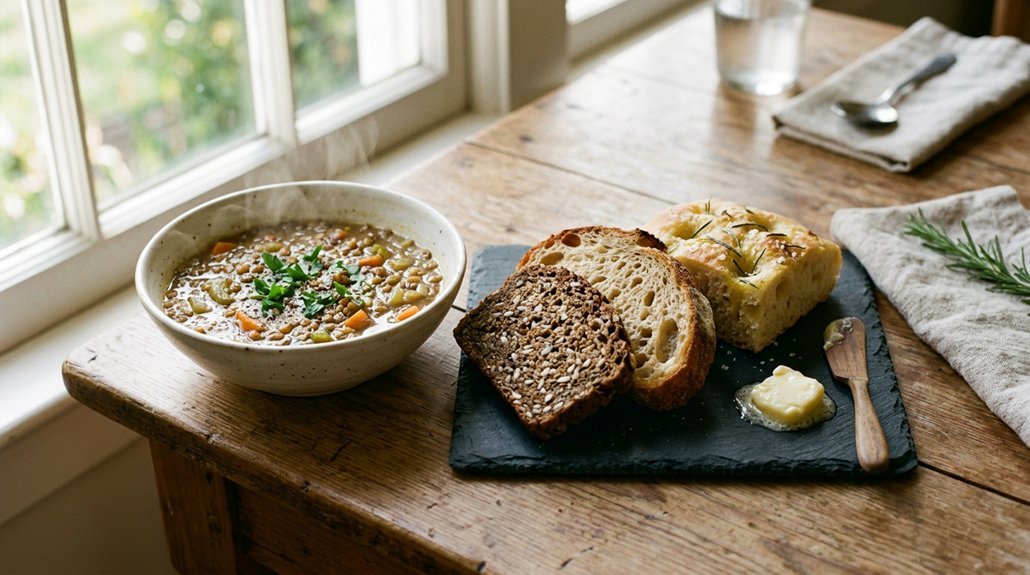

You’ve probably wondered if that steaming bowl of lentil soup fits your daily plan. A standard cup runs 180–193 calories, with 12 grams of protein and 8–10 grams of fiber keeping you full.
But here’s what most guides won’t tell you: your actual count swings wildly based on choices you make before the pot even hits the stove. Red lentils cook down creamier than brown, yet some brands pack 50% more calories per serving. Add two tablespoons of olive oil and you’ve tacked on 240 calories before adding a single vegetable.
The broth matters too. Reduced-sodium vegetable stock keeps it lean; coconut milk or cream-based bases turn it into a calorie bomb. Best For: Lunch meal prep, post-workout recovery, or light dinners under 300 calories.
You need to know which swaps actually move the needle, and whether this “healthy” staple helps or hurts your specific goals. The next sections break down exactly what drives those numbers and how to build a bowl that works for you.
How Many Calories Are in a Cup of Lentil Soup?
So, how many calories are you actually getting when you ladle out a cup of lentil soup? You’re typically looking at 180 to 193 calories per cup serving, depending on what’s in the pot.
What You’re Actually Eating
Check the nutrition facts and you’ll see why lentil soup works as a solid meal. One cup serving delivers 12 grams of protein and 8 to 10 grams of fiber. That’s enough to keep you full through the afternoon.
You’ll also want to watch the sodium; some recipes pack 416 mg per cup.
Best For:
- Lunch meal prep
- Post-workout recovery
- Budget-friendly protein
The calories stay low because lentil soup runs low on fat. You’re getting plant-based protein and fiber without the heavy calorie load. Grab a cup serving and you’ve got a practical, filling option that fits most eating plans.
Recommended Products
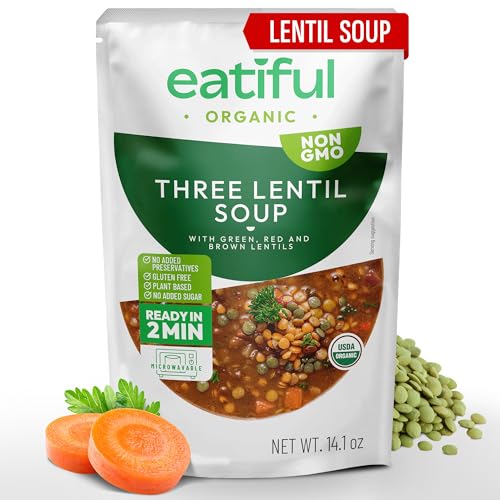
100% ORGANIC INGREDIENTS. EATIFUL’s lentil soup is crafted with care using high-quality, natural ingredients. It features a nourishing mix of organic green, red, and brown lentils, carrots, potatoes, roasted onions, and leeks, all seasoned with sea salt, garlic powder, onion powder, paprika, and smoked paprika. Every spoonful is brimming with plant-based goodness and deep, savory flavors—delivering a wholesome and satisfying meal any time of day.

LENTIL: Savor the mouthwatering combination of lentils, celery, spinach, and more in this vegetarian soup; A comfort food favorite

Why Do Lentil Soup Calories Vary So Much?
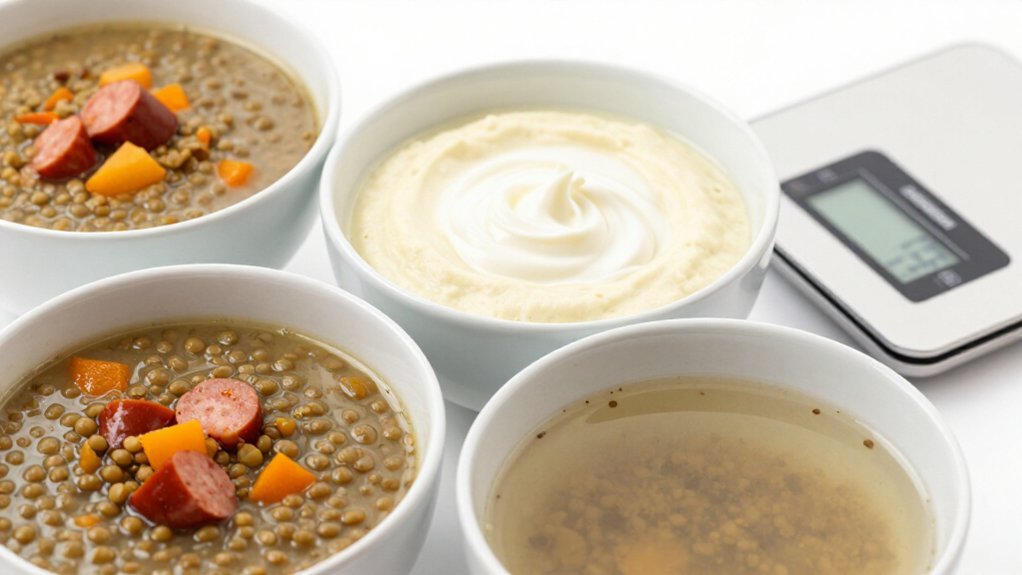
That cup estimate gets you in the ballpark, but you’ve probably noticed lentil soup calories swing pretty widely depending on where you get it. You can blame calorie variation on several factors you control directly.
What Drives the Differences
- Lentil type: Red lentils cook down thinner; brown or green ones keep more bulk and slightly shift the count.
- Portion size: Your “cup” at home might differ from a restaurant ladle.
- Added ingredients: Tomatoes, meat, or cheese pile on fast.
- Oil content: Some recipes use a quick drizzle; others sauté heavily in olive oil.
- Broth choice: Full-fat broth packs more than reduced-sodium versions.
You’ve seen 180-calorie bowls and 193-calorie servings in similar listings. That gap comes from these small choices stacking up. Pay attention to each element, and you’ll predict your bowl’s count before you eat.
Recommended Products

Red lentil soup with cumin, turmeric, cardamom, tomatoes, spinach, and coconut milk


MEDITERRANEAN-STYLE LENTIL SOUP: Savor the flavor of lentils, chickpeas, and roasted red bell pepper in a tomato based broth
Is Lentil Soup Actually Good for Weight Loss?
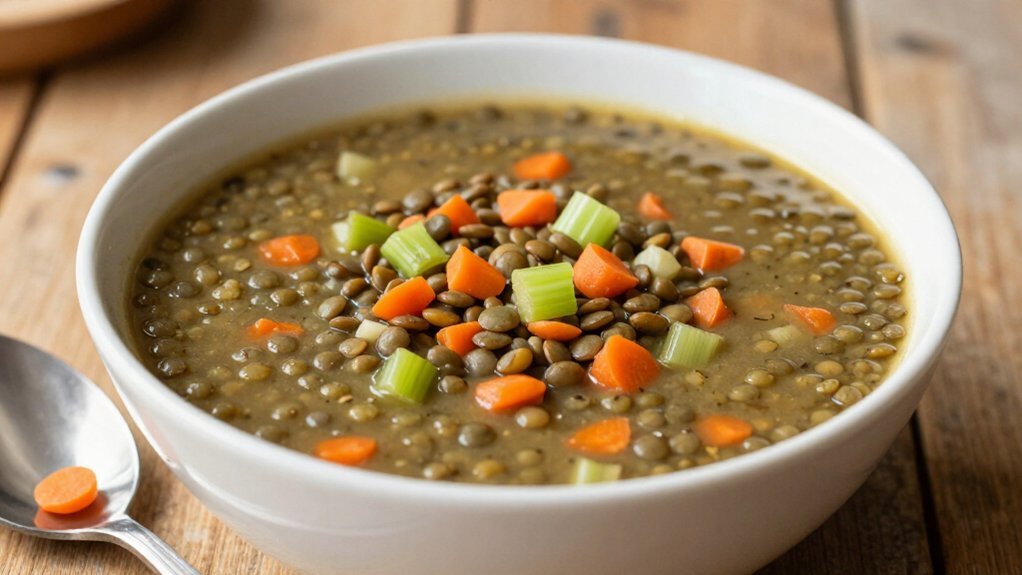
You’re probably wondering if that 180-calorie bowl actually helps you lose weight or just leaves you hungry an hour later. The answer depends on what you put in it.
Why It Works for Weight Loss****
Lentil soup calories stay low, around 180–193 per cup, while delivering 12 grams of plant-based protein and 8 grams of high fiber. That combination triggers real satiety. You feel full longer, which naturally cuts your daily intake.
Most recipes keep fat minimal, 1–5 grams per cup. Sodium per cup stays modest when you cook at home. These factors support weight loss without deprivation.
Best For: Anyone needing volume eating with nutrient density.
The low energy density plus protein and fiber alignment makes lentil soup a practical tool. Use it strategically within your plan, and you’ll likely eat less overall without fighting hunger.
Recommended Products

Rich, organic vegetable broth that's a perfect start to soups and side dishes

Robust vegetable stock made with slow-simmered organic vegetables and herbs and spices

How Lentil Soup Affects Your Blood Sugar
Beyond weight loss, you need to know how lentil soup impacts your glucose levels. Lentil soup has a low to moderate glycemic index, which means you won’t see sharp blood glucose spikes after eating it. The fiber content and resistant starch slow absorption, giving you steady energy.
One cup delivers 12 grams of protein and 8 grams of fiber. This combination keeps you full and stabilizes your numbers. You’re looking at about 17 grams of net carbs per serving, so expect a moderate rise, not a crash.
Best For: Managing post-meal blood sugar.
To flatten spikes further, pair your bowl with whole grains, leafy greens, and a drizzle of olive oil. Lemon helps too. Soak your lentils before cooking. You’ll reduce gas-causing compounds while keeping that gradual glucose response intact.
Recommended Products

LENTIL SOUP WITH ROASTED VEGETABLES: Enjoy the delectable flavor of lentil soup made with roasted vegetables

No hydrogenated fats or high fructose corn syrup allowed in any food

Six (6) cans of Amy's Light in Sodium Soup - two (2) 14.5-oz Lentil Vegetable Soups, two (2) 14.5-oz Lentil Soups and two (2) 14.1-oz Split Pea Soups
Lower-Calorie Lentil Soup: Smart Swaps and Recipes
Your lentil choice matters less than you’d think. Red, brown, or French green lentils all deliver similar protein and fiber, so you can hit about 180 calories per cup with any variety.
Any lentil variety works—red, brown, or French green all deliver similar protein, fiber, and about 180 calories per cup.
What changes your lower-calorie lentil soup outcome is what you add around those legumes.
Try these smart swaps:
- Use reduced-sodium broth and minimal olive oil to stay near 180 calories per cup
- Load up on spinach and tomatoes for volume without calorie creep
- Keep fiber at 8 grams per cup to stay full longer
- Skip cream, butter, or fatty meats that push calories upward
You control the bowl. Build your lower-calorie lentil soup with intention, and you’ll get satisfying protein, steady fiber, and a light calorie footprint that works for any meal.
Recommended Products

AUTHENTIC ASIAN CUISINE: Thai Kitchen Coconut Milk makes it easy to bring the flavours of both East and Southeast Asian cuisines right to your own kitchen; get rich, creamy flavours

One (1) can of Campbell's Protein Mediterranean Lentil Soup has 20 grams of protein and 9 grams of fiber

GLUTEN-FREE